
Choosing a Moving Head LED Light
Moving head LED fixtures vary widely in output, features, and build quality. The right choice depends on where and how the fixture will be used, not on a single "best" model that suits every venue. This article outlines the main factors to weigh before buying.
Define the Application First
Before comparing fixtures, clarify the job the light needs to do. The answer shapes every other decision.
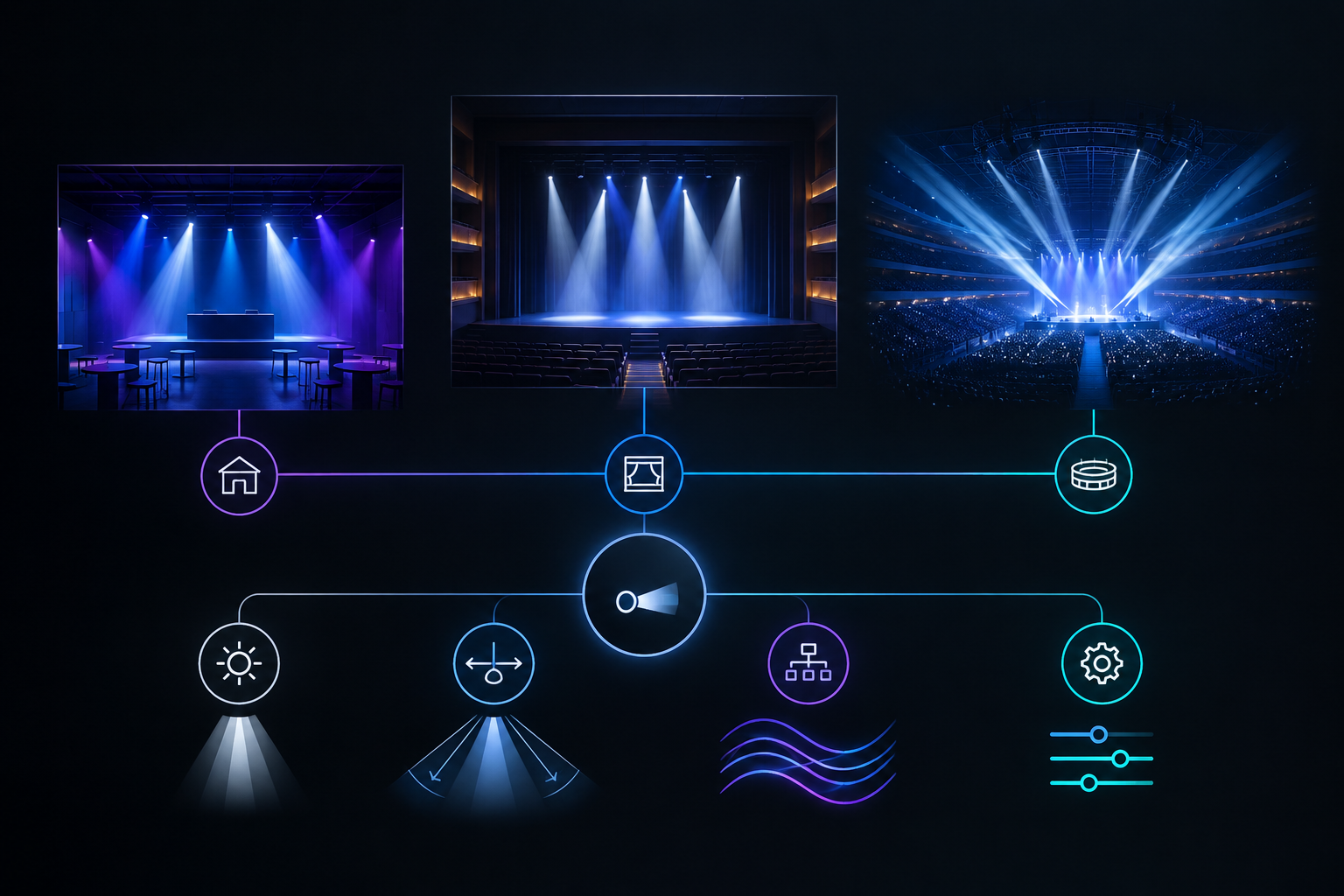
Venue size and throw distance: A small club, a mid-size theatre, and a large arena call for different beam angles and output levels.
Fixed installation or touring: Touring fixtures need to be lighter, quicker to rig, and more resistant to knocks. Fixed installations can prioritize output and feature depth over weight.
Indoor or outdoor use: Outdoor deployment requires a fixture rated for weather exposure and temperature extremes.
Primary function: Wash, beam, spot, hybrid, or profile-style effects each favor different optical designs.
Key Specifications to Compare
Light Engine and Output
LED moving heads use different light source types (single-source LED, multi-source LED arrays, or phosphor-converted sources). Compare output using lumens or lux-at-distance figures rather than raw wattage, since efficiency varies between engines. Check the color temperature range if white light quality matters for the application.
Color Mixing and Quality
Most LED moving heads mix color using RGB, RGBW, RGBA, or similar multi-chip arrangements. More color channels generally give smoother pastels and better white output, but check independent reviews or demos rather than relying on marketing claims, since color rendering varies significantly between engines of similar spec.
Beam Characteristics
Zoom range: A wider zoom range gives more flexibility from a fixed rigging position.
Beam angle: Narrow beams suit long throws and gobo/aerial effects; wide beams suit washes and close work.
Gobo and effects wheels: Check whether gobos are fixed, rotating, replaceable, or animated, and whether the fixture includes prism, frost, or iris functions if those effects are needed.
Movement and Control
Pan/tilt range and speed: Faster, smoother movement matters more for beam-heavy or fast-cued shows than for static washes.
Control protocols: Confirm the fixture supports the console and protocol already in use (commonly DMX512, with some fixtures also offering RDM, Art-Net, or sACN).
Channel modes: More channels give finer control but increase complexity in programming; simpler modes suit smaller rigs or less experienced operators.
Build and Environmental Rating
Housing material and cooling: Fixtures used in hot venues or long running sessions benefit from robust heat management.
IP rating: Required for any outdoor or wet-location use; indoor-rated fixtures should not be used outside their rated environment.
Noise level: Fan-cooled fixtures can be audible; this matters for theatre, broadcast, or other quiet environments.
Weight and Rigging
Check the fixture's weight against the rigging points, trussing, and safety cabling available at the venue. Touring productions in particular should weigh portability against output.
Practical Steps to Narrow the Choice
List the venues and show types the fixture will be used for, and identify the most demanding case.
Set a target throw distance and required brightness at that distance.
Decide whether wash, beam, spot, or hybrid performance is the priority.
Check compatibility with existing control equipment and protocols.
Confirm environmental requirements (indoor/outdoor, temperature, noise).
Compare shortlisted fixtures side by side on the same specification points above, ideally viewed in person or via trusted demo footage rather than spec sheets alone.
Confirm rigging and power requirements against what the venue can support.
Questions to Ask Before Buying
What is the rated output and how was it measured?
What is the beam angle range and zoom ratio?
What control protocols and channel modes are supported?
What is the IP rating, and does it match the intended environment?
What is the fixture weight, and what rigging does it require?
What is the expected noise level in operation?
[confirm: whether this article should link to specific fixture ranges, comparison tools, or a demo request process once those are available]
When to Ask for Guidance
If the intended use case is unusual (extreme temperatures, very long throw distances, integration with a specific console ecosystem), consult a lighting professional or supplier before purchasing rather than relying on spec comparisons alone.